
A production-side comparison of the five fabrics behind most cosmetic, diaper, gym and packing bags, with a separate oxford vs nylon decision table.
What A Bag Fabric Actually Decides
A bag fabric decides four things at once: how the bag holds its shape, how it takes a print, how long it lasts, and what it costs per piece. Buyers usually pick on colour and price, then discover in the sample that a satin shell will not hold a structured case and a 210D shell will not survive a 6 kg load.
This guide is the comparison we walk through with brands before a quote: five fabrics, the same five criteria, and the one decision most orders get wrong — oxford versus nylon.
The comparison below is the one we use in a quote, and it sits behind every custom packing organizers set as much as behind a cosmetic pouch.
The Five Fabrics We Use Most
Weights are per square metre of the finished, coated fabric. Cost is the share of the unit price at 500 pieces.
| Fabric | Typical weight | Cost | Abrasion | Hand feel | |
|---|---|---|---|---|---|
| 600D Oxford (PU coated) | 220–260 gsm | Medium | Excellent | Screen, heat transfer, embroidery | Firm, slightly stiff |
| Nylon 420D / 1680D | 180–320 gsm | Medium–high | Excellent | Screen, transfer; dye sublimation on white | Smooth, soft drape |
| Cotton canvas 12–16 oz | 400–540 gsm | Medium | Good | Screen print, embroidery, patch | Dry, textured, ages well |
| PU leather | 500–700 gsm | High | Good (surface scuffs show) | Deboss, foil, silicone patch; print needs primer | Smooth, structured |
| Pressed felt 2–3 mm | 600–900 gsm | Low–medium | Fair (pills) | Embroidery only in practice | Soft, holds shape |
Those five cover most of what a custom cosmetic bags or custom packing organizers programme needs. Velvet, satin, ripstop and mesh are variants rather than separate decisions.
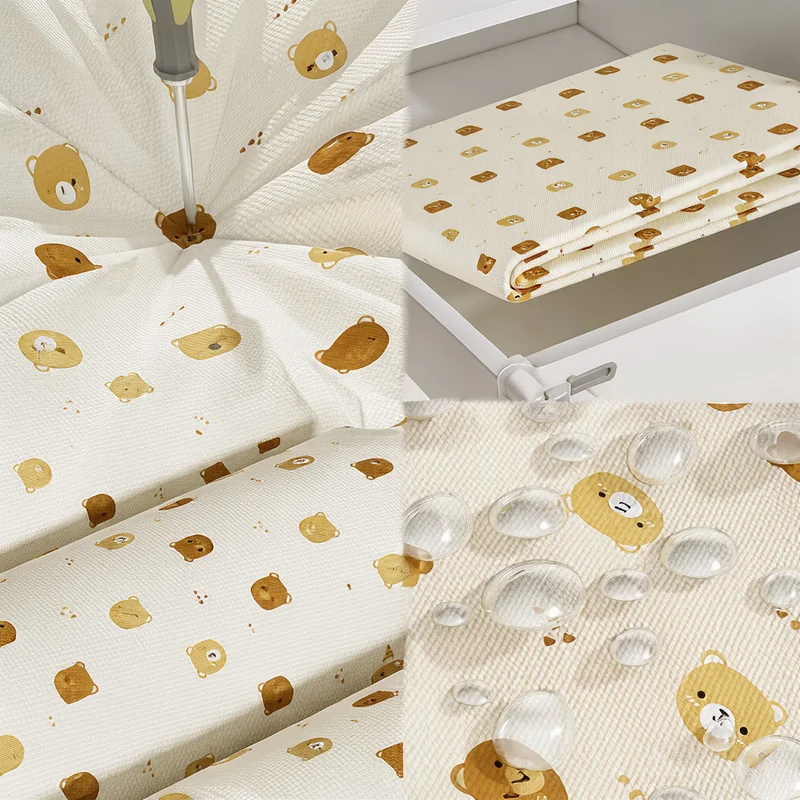
Oxford vs Nylon: How To Choose
This is the question that decides most bag orders, and it has a clean answer once you write down four requirements.
| Requirement | Choose oxford when… | Choose nylon when… |
|---|---|---|
| Structure | The bag needs to stand up: cases, caddies, organizers | The bag needs to fold or pack flat: travel, packing cubes |
| Weight | Weight is not critical (220–260 gsm) | Every gram counts (180–220 gsm for 420D) |
| Surface | You want a matte, canvas-like face for print | You want a smooth face with a soft sheen |
| Budget | 600D Oxford is the cheaper workhorse | Nylon costs 10–18% more at the same denier |
A practical default: 600D oxford for anything that stands, 420D nylon for anything that folds. If the bag is both — a structured travel bag — use oxford for the body and nylon for the gusset, which is what we quote on most duffels.
Denier numbers are not comparable across fibre types. A 600D polyester and a 420D nylon are close in strength because nylon yarn is stronger per denier; the nylon is lighter and more expensive. That is the trade the oxford-versus-nylon question really asks, and it is why "higher denier is better" is the wrong rule.
Denier, Coating And What Water Resistance Really Means
Denier is the weight of the yarn, not the strength of the fabric. 600D means a thicker yarn than 210D, which means a heavier, stiffer cloth — not automatically a better bag. A 210D with a PU back-coating is more water-resistant than a 600D with no coating, because the coating is what stops the water.
Three coatings appear in quotes:
- PU (polyurethane) — soft, quiet, good water resistance; the default for bags.
- PVC — harder, cheaper, heavier; being phased out in the EU over phthalates.
- None / water-repellent finish only — beads water briefly, soaks through in rain.
If the bag has to keep water out rather than shed it, the answer is a coated shell plus sealed seams, not a heavier fabric. Ask for the coating weight in grams per square metre; "waterproof" without a number is a word.
Coating weight is quoted in grams per square metre and it is the number that predicts water resistance. A 600D with a 15 gsm coating beads water for a minute; the same fabric at 30 gsm keeps it out for an hour. Ask for the coating weight on the spec sheet, and if the answer is "waterproof", ask again.
Which Fabric For Which Bag
The choice follows the load and the life of the bag, not the look book:
- Cosmetic pouch — satin or 210D polyester for a gift, 600D oxford or PU for daily use.
- Diaper backpack — 600D oxford with a 210D taffeta lining; foam only in the bottle pocket.
- Gym duffel — 600D oxford body, 420D nylon gusset, PU-backed lining in the wet pocket.
- Packing cube — 210D nylon ripstop or 300D polyester with a mesh top panel.
- Garment cover — non-woven for storage, PEVA or 210D nylon for transit.
One rule holds across all of them: the lining should be lighter than the shell and wipe-clean. A heavy lining makes a soft bag stiff; a decorative lining makes a wet bag smell.
Fabric choice also sets the minimum order. Stock oxford colours are on the shelf and run at 100 pieces; a custom-dyed canvas needs a dye lot and usually 300. That is a commercial difference, not a technical one, and it belongs in the same conversation as the hand feel.
Print And Logo Compatibility By Fabric
Every fabric rejects one common print method, and finding out at the sample stage is expensive:
- 600D oxford — screen print and heat transfer both work; embroidery needs a backing to avoid puckering.
- Nylon — screen print works on coated nylon; dye sublimation only on white, uncoated nylon.
- Canvas — screen print and embroidery are the natural choices; transfers sit on top and crack.
- PU leather — needs a primer before any print; deboss and silicone patches are more reliable.
- Felt — embroidery only in practice; print sinks into the pile and reads as a blur.
Test one piece before the run. A 3M tape pull on the first printed bag tells you in ten seconds what a colour proof cannot.
Print compatibility also depends on the coating, not just the fibre. A PU-coated oxford prints well; the same oxford with a silicone finish needs a different ink and a longer cure. If the artwork matters more than the hand, ask what the factory prints on most often and choose the fabric around that answer.
How To Specify A Bag Fabric On A Purchase Order
Write six lines and the factory cannot substitute quietly:
- Fabric name and denier — 600D polyester oxford, not "oxford".
- Weight in gsm — 220 gsm ±5%.
- Coating — PU back-coated, 30 gsm.
- Colour — Pantone reference plus the stock card name.
- Lining — 210D taffeta, colour matched or stock.
- Test standard — REACH for the EU, CPSIA for US children's products.
A purchase order with those six lines can be inspected against, and a QC report can cite them. Without them, the only specification is the sample — which is exactly what a substitution exploits.
Once the fabric is fixed, the bag sample approval routine and the cosmetic bag manufacturer guide cover the next two decisions.
Frequently Asked Questions
Is 600D oxford better than nylon?
What does 600D mean on a bag?
Which fabric takes a screen print best?
Is PU leather waterproof?
Next Step
Send the style, the quantity and the logo method and we reply with a price band and a sampling date within 12 hours.